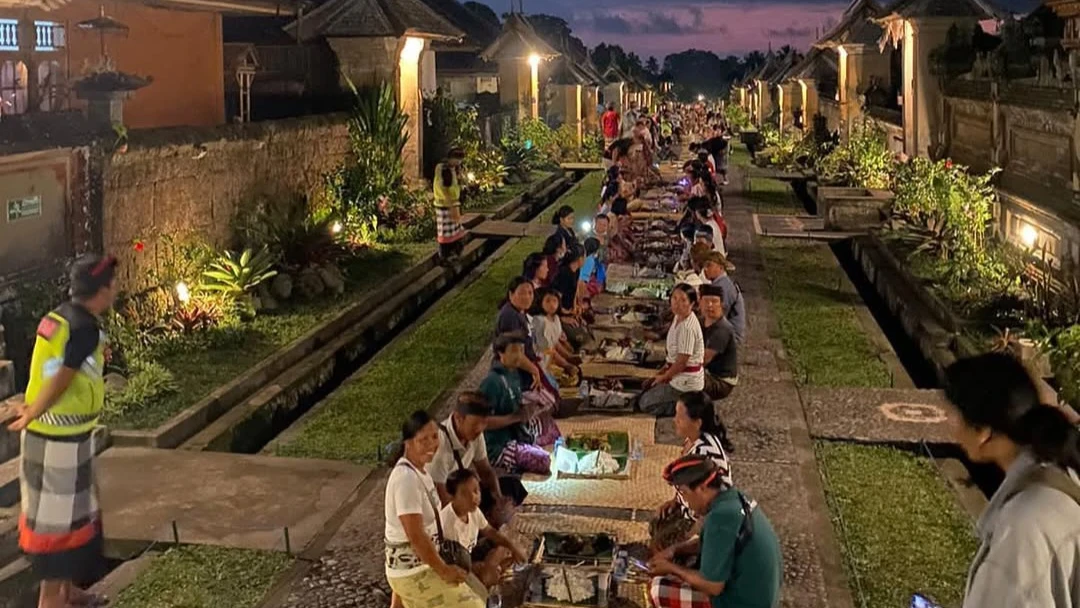
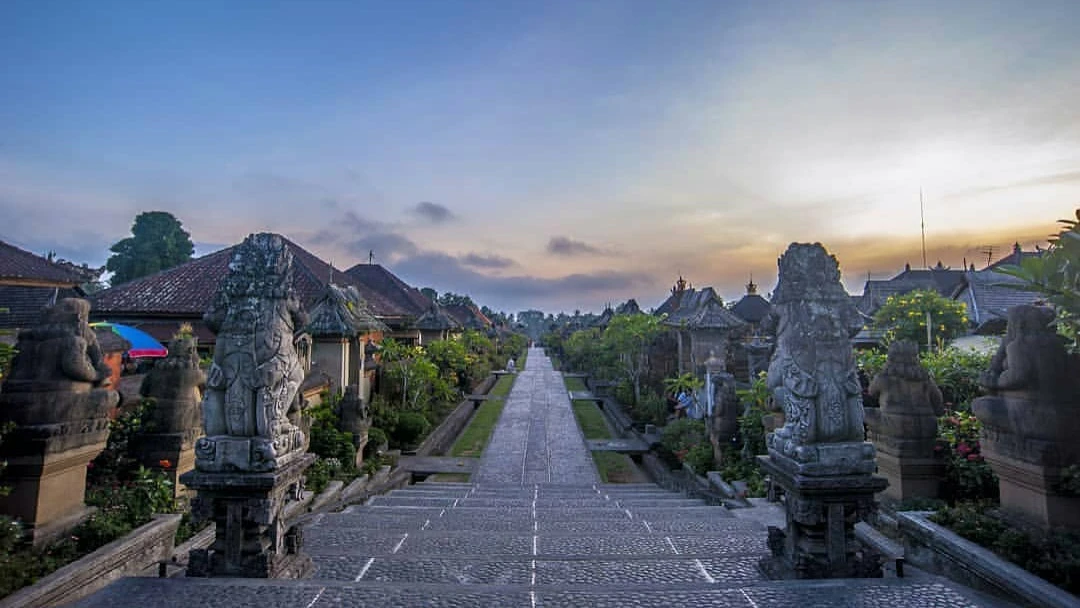
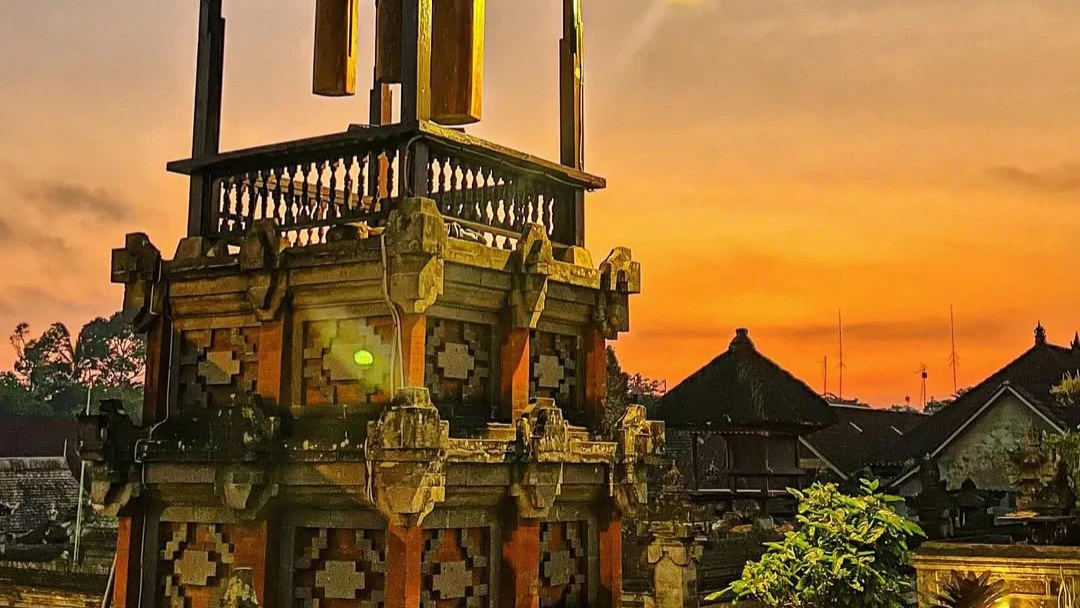
Penglipuran Village is one of the most beautiful traditional villages in Bali. It is located in Bangli Regency, not far from Kintamani area. This village is well-known for its clean environment, unique culture, and peaceful atmosphere. Many tourists come here to enjoy the traditional Balinese life and simple village scenery.
The Locations
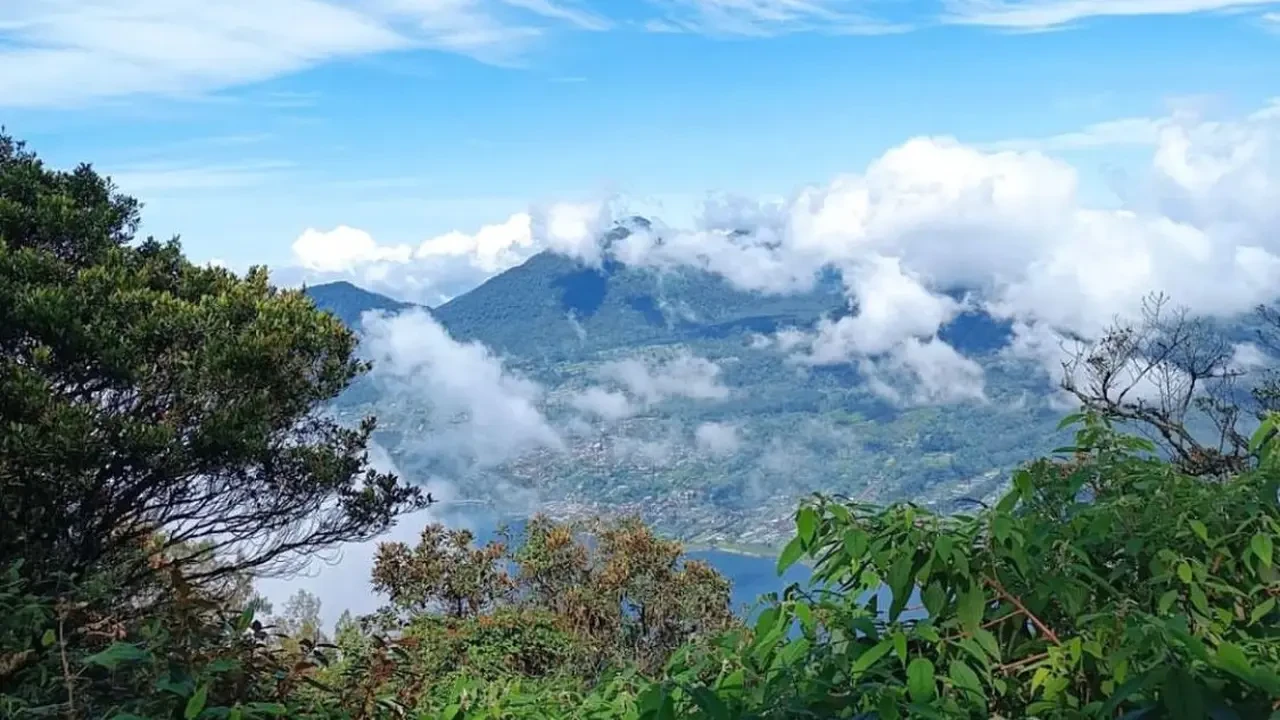
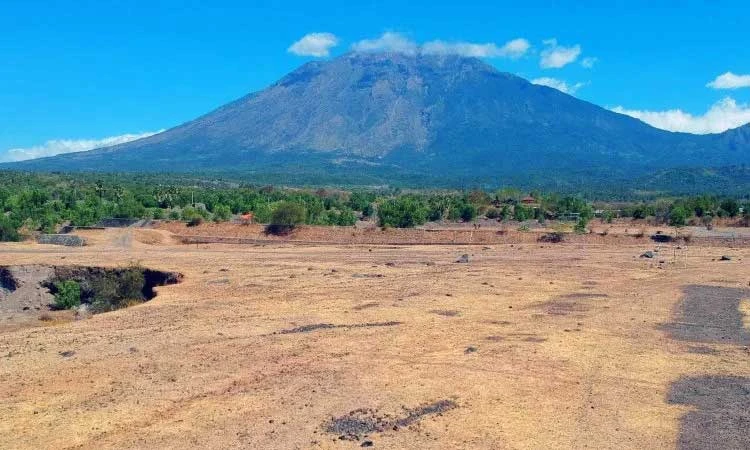
Penglipuran Village is located in the highlands of Bangli Regency, about 2-2,5 hours from Ngurah Rai International Airport. From Ubud to Penglipuran Village is about 45 minutes. It sits at an elevation of around 600–700 meters above sea level, so the air here feels cooler and fresher. No ocean views, but you get lush greenery, bamboo forests, and Mount Batur peeking out in the distance if the skies are clear. Whether you’re coming with a driver or braving the scooter ride, it’s worth the journey.
A Brief History of Penglipuran Village
Penglipuran village, based on circulating sources, was located in the Bangli kingdom. A long time ago, when there was a war and the King of Bangli assigned the Bayung Gede villagers to join the war and other activities in the kingdom, because the location of the Bayung traditional village was far away, then the King of Bangli gave land to the village of Bayung Gede, which is where Penglipuran Village is now, so whenever needed, the residents of the village of Bayung Gede could quickly face the king. Originally mentioned in the inscription is the Penglipuran Traditional Village. And etymologically, the word "Penglipuran" can be interpreted as follows.
Penglipuran comes from the word "pangeling" and "pura" being the word penglipuran, meaning the people of Penglipuran build temples like in Bayung Gede to remember the temple in Bayung Gede and remember their ancestors. Penglipuran comes from the words "pelipur" and "lara", which become penglipuran, meaning that penglipuran becomes a place of comfort in times of sorrow, in addition to the fact that the people can often cheer up when the king is in trouble.
Layout of Penglipuran Village
One of the biggest parts of life in this village centres around their unique approach to managing the land. They base their approach on the traditional “Tri Mandala Concept”. That is, the land is divided into three zones based on the spiritual purity of the land.
The purest land is the Utama Mandala, and it’s where the temple is found. This land is used to worship the gods and is considered a sacred place. The Madya Mandala is the next level of sacred land, and it’s where the people of the village are allowed to live. Then, the lowest level of land is the Nista Mandala, which is where the village graveyard is found and where the worship of Shiva (the god of destruction) is permitted.
Bamboo Forests
The bamboo forest here is a farmed forest rather than a naturally occurring one and consists of 15 different native bamboo species. The forest is entirely managed by the villagers, and some villagers have the right to exploit the bamboo commercially. Bamboo is a major structural component of village housing, and 4-5 layers of bamboo are woven together to create roofs and walls.
How to Get to Penglipuran Village
It’s very easy to get to Penglipuran Village if you’re coming from Denpasar or the Ngurah Rai International Airport. You can take a taxi, and it won’t cost very much to get there as it’s just 45 kilometres or so north of the capital. If you’re coming from further afield, you might want to consider hiring a private car and driver for the day. This is a very convenient and reasonably priced way to travel, and it’s safe, too.
Besides enjoying the scenery, tourists can also learn about local culture. The villagers are very friendly and still keep their traditions, customs, and ceremonies. Sometimes, you can see local people making offerings or wearing traditional clothes. Visitors can also buy local souvenirs such as handicrafts and traditional snacks made by the villagers.
Penglipuran Village is a perfect place for tourists who want to experience real Balinese village life. With its clean environment, traditional houses, and beautiful bamboo forest, this village offers a simple but unforgettable travel experience in Bali.